
Menu
October 19th, 2026
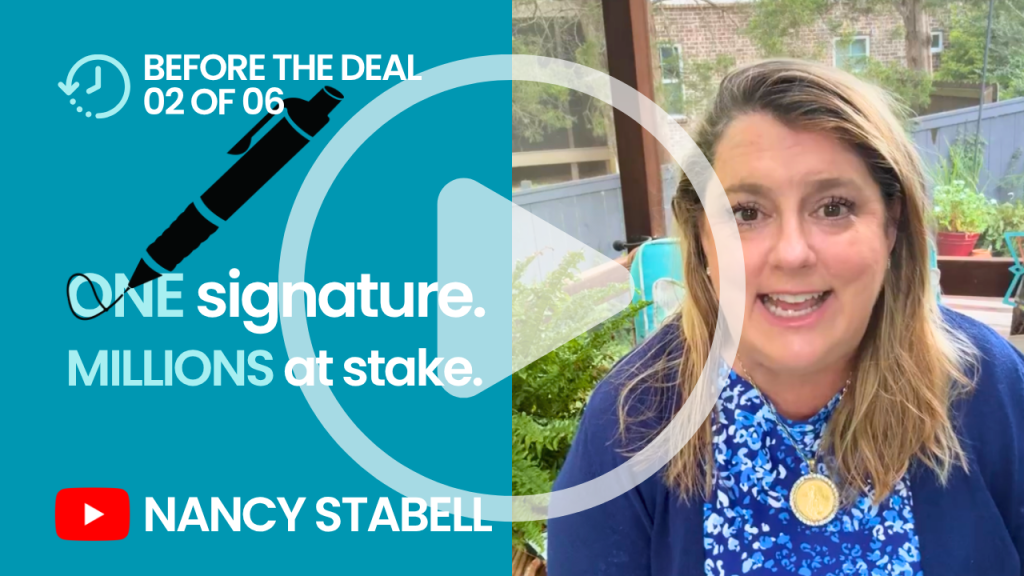
You’ve found the buyer, agreed on the price, and lined up financing. Could someone who isn’t even part of the deal keep it from closing?
In one acquisition Wood Stabell Law Group handled, a customer’s signature nearly did exactly that.
The firm represented a buyer purchasing a manufacturing company with great management and strong financial performance. Everything was moving toward closing.
But three key customer contracts, together representing roughly 20–30% of the company’s revenue, required customer consent before they could be assigned as part of the ownership change.
One of those customers was a large multinational company. Getting its approval proved much harder than the seller expected.
A signature you can’t schedule
The founder knew for weeks that consent was needed and had been encouraged to start early.
He put it off. He didn’t want to raise questions with the customer, and he assumed obtaining approval would be simple.
Instead, the request moved from one manager to another. No one wanted to be the person who signed. Everyone wanted someone else to make the decision.
Meanwhile, the acquisition lender’s position was clear: without the consent, it wouldn’t fund the purchase.
The team ended up tracking down executives on vacation to obtain the signature. The consent finally arrived, and the transaction closed.
But the deal came much closer to falling apart than it should have.
What’s buried in your agreements?
If you’ve ever skimmed a contract provision because it looked like standard language, this story is worth remembering.
Assignment and change-of-control provisions can matter when you sell your business. Depending on the agreement and the transaction, you may need another party’s consent.
That can put part of your closing timeline in someone else’s hands.
In this transaction, the problem wasn’t a customer refusing to approve the sale. It was getting someone to take responsibility for signing.
You can be ready to move forward while the person whose approval you need is unavailable, waiting on another department, or unsure who has authority.
Start while you still have time
Before you’re working toward a closing date, understand what your agreements require.
Which contracts may need consent? Who needs to provide it? How much time might their approval process take?
Some approvals happen quickly. Others move through several people and departments. You can’t control how quickly another company makes decisions, but you can control when you start addressing the requirement.
Due diligence doesn’t create problems. It reveals them.
Finding those issues early gives you more time to work through them before financing or closing depends on the answer.
What could hold up your future sale? Download our complimentary Deal Readiness Checklist to start identifying issues before they become expensive surprises.
The information provided in this article is for informational purposes only and does not constitute legal advice. No attorney-client relationship is formed by virtue of this article. For specific legal advice related to your situation, please consult with a qualified attorney.
Categories: Uncategorized
Meet Nancy Wood Stabell

Nancy Wood Stabell is an attorney and business owner with a law degree, an MBA, and two decades of experience delivering results for sophisticated small and medium-sized businesses, entrepreneurs and investors. Her deep background in entrepreneurship and law allows her to take an innovative, business-oriented approach to the legal issues her clients face.
Contact Us
