
Menu
October 12th, 2026
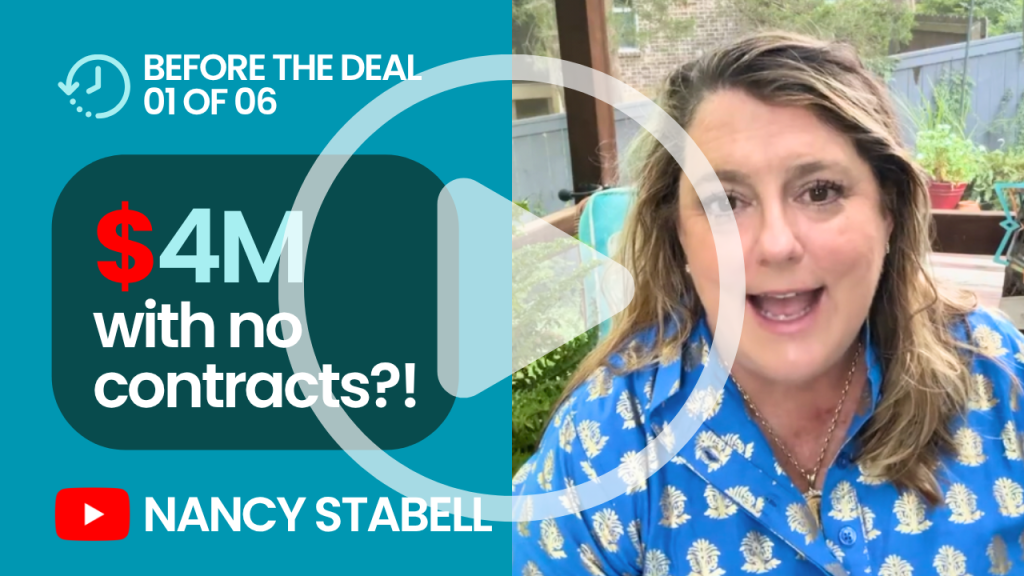
Your business could be worth millions and still leave a buyer wondering what they’re actually getting.
Consider a business Wood Stabell Law Group represented in a sale for approximately $4 million. It had a fantastic reputation, strong recurring revenue, and loyal customers. Many had stayed with the company for more than ten years.
What it didn’t have was a single written customer agreement.
Those relationships were valuable. But when it came time to sell, the buyer needed more than a history of happy customers.
You see loyalty. Your buyer sees questions.
When a customer has worked with you for fifteen years, asking them to sign an agreement may not feel urgent. You know each other. You trust each other. The arrangement works.
A buyer doesn’t have that same history.
Without written agreements, the buyer couldn’t verify basic details: how long customers were committed, whether pricing could change, what services were included, or what would happen after closing.
The issue wasn’t whether those customers were likely to leave. It was how much the buyer could confirm about the relationships supporting the business’s revenue.
You may feel confident those relationships will continue. Your buyer needs evidence to evaluate that confidence.
Your contracts tell a bigger story
It’s easy to think of a contract as something you pull out when a relationship goes wrong.
But when you’re selling your business, your contracts serve another purpose: they help a buyer understand how your company operates.
They help answer questions such as:
- How predictable is your revenue?
- How easily can a customer end the relationship?
- Are pricing and services clearly defined?
- Can an agreement be transferred to a buyer?
- Does it renew automatically?
Those details help show whether the business you’ve built is organized and prepared for a change in ownership.
When the answers are missing, the buyer has more questions—and you have more explaining to do.
Start before a buyer asks
If selling is part of your future, take a look at your customer agreements now.
Do you have written agreements? Do they reflect how you actually work with those customers? Can you readily find the terms a buyer will want to review?
Identifying gaps early gives you time to address them before a transaction depends on the answers.
Trust builds great businesses. Documentation preserves their value.
What else might a buyer question? Download our complimentary Deal Readiness Checklist to start identifying areas that deserve attention before due diligence begins.
The information provided in this article is for informational purposes only and does not constitute legal advice. No attorney-client relationship is formed by virtue of this article. For specific legal advice related to your situation, please consult with a qualified attorney.
Categories: Uncategorized
Meet Nancy Wood Stabell

Nancy Wood Stabell is an attorney and business owner with a law degree, an MBA, and two decades of experience delivering results for sophisticated small and medium-sized businesses, entrepreneurs and investors. Her deep background in entrepreneurship and law allows her to take an innovative, business-oriented approach to the legal issues her clients face.
Contact Us
