
Menu
September 14th, 2026
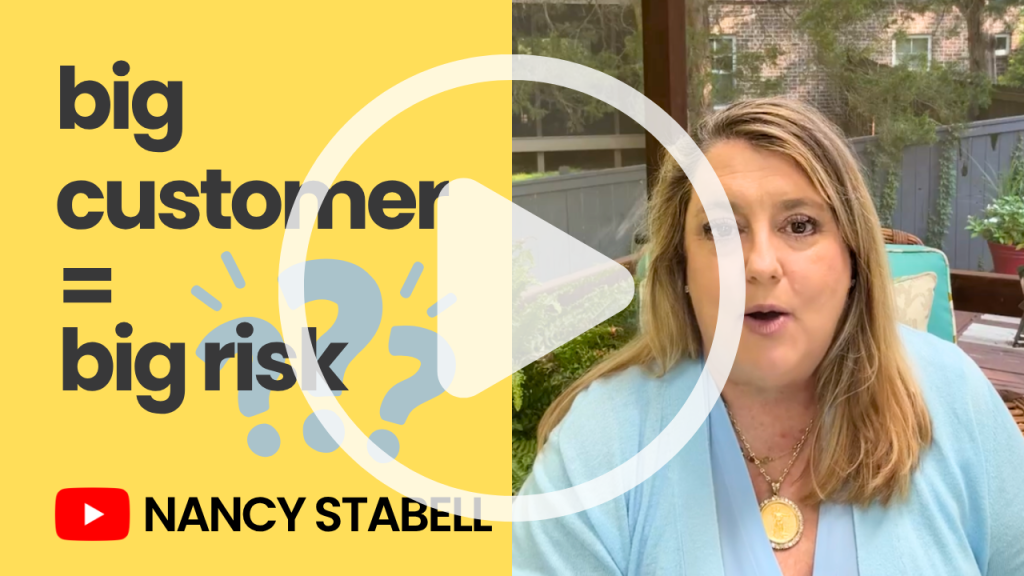
A customer responsible for a significant share of your company’s revenue can be one of your greatest assets. That same relationship can also become one of the biggest concerns during a sale.
Does customer concentration automatically kill a deal? Not necessarily. But it will become a major focus during due diligence.
Why Buyers Worry About Customer Concentration
Wood Stabell Law Group recently represented a company whose largest customer accounted for nearly 60% of its revenue.
From a buyer’s perspective, that creates several important questions:
- What happens if the customer leaves?
- Will the relationship survive a change in ownership?
- Could the customer use the transaction as an opportunity to renegotiate pricing?
- Does the relationship belong to the company or primarily to its founder?
In this transaction, the buyer ultimately met with the customer. That conversation changed how the buyer viewed the risk.
The customer was enthusiastic about the acquisition because the buyer could provide stronger financial backing, additional resources, and greater long-term stability. What initially appeared to be a significant vulnerability ultimately increased the buyer’s confidence, and the transaction closed successfully.
Customer Concentration Does Not Automatically Destroy Value
The central issue is not always concentration itself. It is uncertainty.
Sophisticated buyers want to understand the strength and structure of an important customer relationship. They may ask:
- Is there a written contract?
- How long has the customer worked with the company?
- Who owns and manages the relationship?
- Is the relationship spread across multiple people within both organizations?
- Is the customer expected to remain after the transaction?
When those questions have reassuring answers, a buyer may be able to evaluate the risk and move forward.
When the future of the relationship is unclear, however, the buyer may seek additional protection through a larger escrow, an earnout, a purchase-price reduction, or other deal terms. In some cases, the buyer may decide not to proceed.
Buyers can price risk. What they struggle to price is uncertainty.
Build a Relationship That Can Survive a Sale
Your largest customer may be one of your company’s most valuable assets. But the relationship should be bigger than any one person and strong enough to withstand a change in ownership.
Founders considering a sale in the next few years should evaluate customer relationships before a buyer begins asking questions. Strengthening contracts, documenting the history of important accounts, and expanding relationships beyond the founder can help a buyer better understand what it is acquiring.
How would a sophisticated buyer view your business today?
Catch up on our Through the Buyer’s Eyes series.
Download our complimentary Deal Readiness Checklist to identify issues that could affect buyer confidence, deal terms, or your company’s value.
The information provided in this article is for informational purposes only and does not constitute legal advice. No attorney-client relationship is formed by virtue of this article. For specific legal advice related to your situation, please consult with a qualified attorney.
Categories: Uncategorized
Meet Nancy Wood Stabell

Nancy Wood Stabell is an attorney and business owner with a law degree, an MBA, and two decades of experience delivering results for sophisticated small and medium-sized businesses, entrepreneurs and investors. Her deep background in entrepreneurship and law allows her to take an innovative, business-oriented approach to the legal issues her clients face.
Contact Us
